

IPS Global Solutions INC (DBA IPspeedy)
Your Trusted Worldwide IP Partner
 English
-
 中文
中文 -
English


Country/Region: Australia
Competent Authority: IP Australia
Official Website: https://www.ipaustralia.gov.au
Eligible Applicants: Australian enterprises; foreign enterprises; individual applicants;
*Foreign applicants are generally required to submit applications through a local agent.
Classification System: Australia uses the Nice Classification (45 classes in total); multi-class applications are permitted.
Required Application Materials:
Generally, the following information is required:
Trademark representation (image);
Applicant's name and address;
Classes of goods or services;
Registration Timeline: Approximately 7–9 months to complete registration.
Validity Period: 10 years (calculated from the date of registration); renewable every 10 years, with no limit on the number of renewals.
News

Federal Circuit Rejects Penumbra's Test for Provisional Prior-Art Dates in Dental Monitoring SAS v. Align Technology
2026-08-14 10:33:04
Click:
On August 10, 2026, the U.S. Court of Appeals for the Federal Circuit issued a precedential decision in Dental Monitoring SAS v. Align Technology, Inc., No. 2025-1752, fundamentally changing how the Patent Office and litigants determine the prior-art date of a patent or published application that claims priority to an earlier provisional application.
Under 35 U.S.C. § 102(a)(2), a patent or published application is prior art as of the date it was 'effectively filed,' and § 102(d)(2) allows that date to reach back to the filing date of the earliest application in a priority chain — provided the reference is entitled to claim priority and the earlier application describes the subject matter relied upon. In the pre-AIA case Dynamic Drinkware, LLC v. National Graphics, Inc. (Fed. Cir. 2015), the Federal Circuit held that a reference does not get its provisional's filing date merely by claiming it: the provisional must supply § 112 support for the claims of the reference itself, and the party relying on the reference bears the burden of proof.
For post-AIA patents, however, the USPTO had been applying a looser rule, reasoning that the statute requires only that the reference be 'entitled to claim' priority and that the earlier application 'describe the subject matter' used in the rejection — dropping the requirement that any claim of the reference actually be entitled to the earlier date. That approach was embedded in the PTAB's precedential decision in Penumbra, Inc. v. RapidPulse, Inc. (IPR2021-01466, decided March 10, 2023). In Dental Monitoring, the Federal Circuit rejected the agency's post-AIA approach, held that the Dynamic Drinkware rule carries over to § 102(d)(2), and overruled Penumbra.
The consequences are significant for both examination and litigation. Patent owners now have a new avenue to disqualify prior-art references whose earlier effective dates depend on provisional filings that do not support the reference's own claims. Although the decision centers on priority to U.S. provisional applications, commentators note the same logic should extend to references claiming priority to foreign filings — covering the two principal ways patents claim priority.
Practitioners expect the decision to reshape strategy in inter partes review and district court validity disputes alike, as parties re-examine priority-chain evidence for key references. The ruling also lands amid a broader recalibration of PTAB practice under USPTO Director John Squires, including the Office's pending final rule on IPR institution.
Original Link: https://www.womblebonddickinson.com/us/insights/alerts/federal-circuit-rejects-penumbras-ministerial-test-provisional-prior-art-dates
Author:
Womble Bond Dickinso
From:
Womble Bond Dickinson (legal alert)
新闻推荐
recommendation
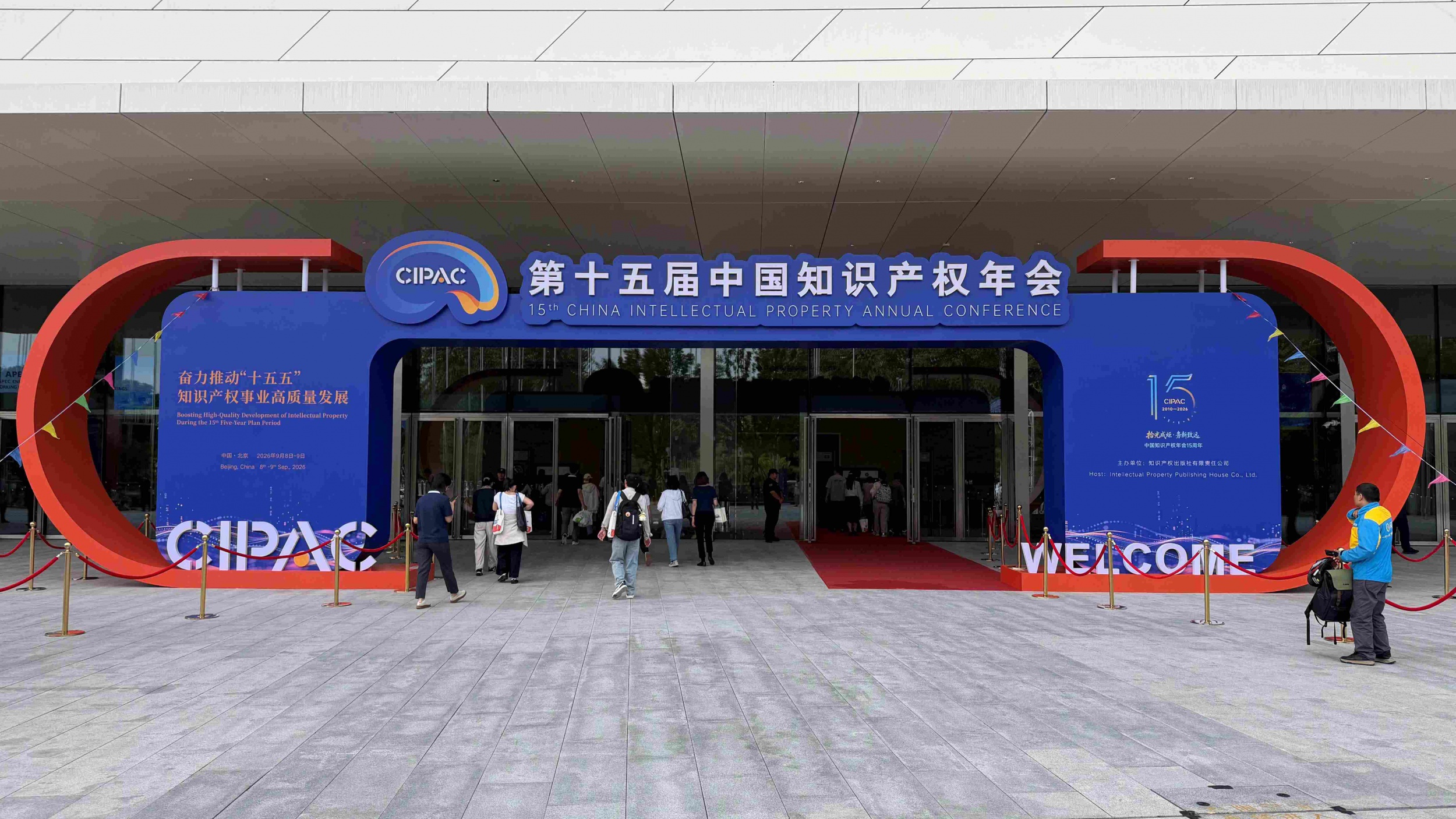




Article recommendation
-
top Linking the Globe, Empowering Peers | IPspeedy Attends the 15th Intellectual Property Annual Conference
-
IPOS Update on IP/IT Dispute Resolution in Singapore: August-September 2026
-
Latest Trends in Australian Intellectual Property Applications
-
UPC Unfiltered, by Willem Hoyng – UPC Decisions Week 38, 2026

Top
Book Your Free Consultation


Phone / WhatsApp / WeChat

Room 220, 2nd Floor, Building E Bantian International Center
Huancheng South Road, Bantian Street Longgang District, Shenzhen, China
Talk to us
Clarify your questions or request a quote regarding our services. Please fill out the form, and you will be contacted soon.

IPS Global Solutions INC (DBA IPspeedy)
Your Trusted Worldwide IP Partner
Copyright © 2026 Pengzhiyun Intellectual Property
IPspeedy is the international operating name of Pengzhiyun Intellectual Property.
Pengzhiyun Intellectual Property
Action builds careers; sharing creates the future.


Follow Our TikTok
✅ Real case victories and success stories
✅ Latest IP market trends and analysis
✅ Practical knowledge and industry updates
Scan to stay informed and ahead of the curve.
Follow Our TikTok
✅ Real case victories and success stories
✅ Latest IP market trends and analysis
✅ Practical knowledge and industry updates
Scan to stay informed and ahead of the curve.
Copyright © 2026 Pengzhiyun Intellectual Property
IPspeedy is the international operating name of Pengzhiyun Intellectual Property.
