

IPS Global Solutions INC (DBA IPspeedy)
Your Trusted Worldwide IP Partner
 English
-
 中文
中文 -
English


Country/Region: Australia
Competent Authority: IP Australia
Official Website: https://www.ipaustralia.gov.au
Eligible Applicants: Australian enterprises; foreign enterprises; individual applicants;
*Foreign applicants are generally required to submit applications through a local agent.
Classification System: Australia uses the Nice Classification (45 classes in total); multi-class applications are permitted.
Required Application Materials:
Generally, the following information is required:
Trademark representation (image);
Applicant's name and address;
Classes of goods or services;
Registration Timeline: Approximately 7–9 months to complete registration.
Validity Period: 10 years (calculated from the date of registration); renewable every 10 years, with no limit on the number of renewals.
News

Chinese Tech Firm Wins Complete Victory in US Patent Litigation
2026-10-08 10:10:00
Click:
A cross-border patent lawsuit lasting nearly three years has ended in a complete victory for a Chinese technology company, The Paper reported on October 6, 2026. Gongjing Technology (Jiaxing) Co., Ltd. prevailed in its US patent dispute with Japan's Kaneka Corporation, after the US District Court for the Eastern District of New York invalidated the asserted core patent claims and rejected Kaneka's infringement allegations in full. The win removes the intellectual property obstacle facing the company's domestic reduced coenzyme Q10 products entering the US market.
In October 2023, Kaneka sued Gongjing Technology in the Eastern District of New York, alleging that the company's flagship reduced CoQ10 product CrysQnol (formerly branded Crystal QH) infringed claims 5 and 15 of its US Patent 7,829,080. The case was a professional contest over core technical validity and the boundaries of patent rights, directly determining whether the company's self-developed products could access the US market. Facing high legal costs and commercial pressure from hesitant US partners, the company evaluated settlement options but ultimately chose to defend itself through the US judicial process.
Kaneka's asserted claims concerned reduced CoQ11, a natural impurity in reduced CoQ10, arguing that any amount of the ingredient could stabilize reduced CoQ10. Under the defense's effective challenge, the court focused on the technical effect and its basis, finding that Kaneka had failed to prove it possessed technology and scientific evidence matching the claim scope when it filed the patent application in 2007, and that the disclosed embodiments could not support such a broad claim scope. After detailed fact-finding, expert evidence and multiple rounds of legal and technical argument, the court declared the two asserted claims invalid for lack of utility, insufficient disclosure and non-enablement.
A company representative said the dispute concerned the international fair-competition rights of its self-developed technology rather than a simple cost-benefit calculation, adding that the firm chose to compete within the international rules system instead of avoiding it. Industry observers describe the outcome as a landmark for Chinese functional-ingredient makers defending their rights in the United States, marking a shift from passive response to proactive, rule-based engagement in overseas IP disputes. With the judgment in place, the IP risks for CrysQnol's US expansion are cleared, and the company says it will continue clinical research and global IP layout for the product.
Original Link: https://m.thepaper.cn/newsDetail_forward_34204216
Author:
The Paper
From:
The Paper (thepaper.cn)
新闻推荐
recommendation




Article recommendation
-
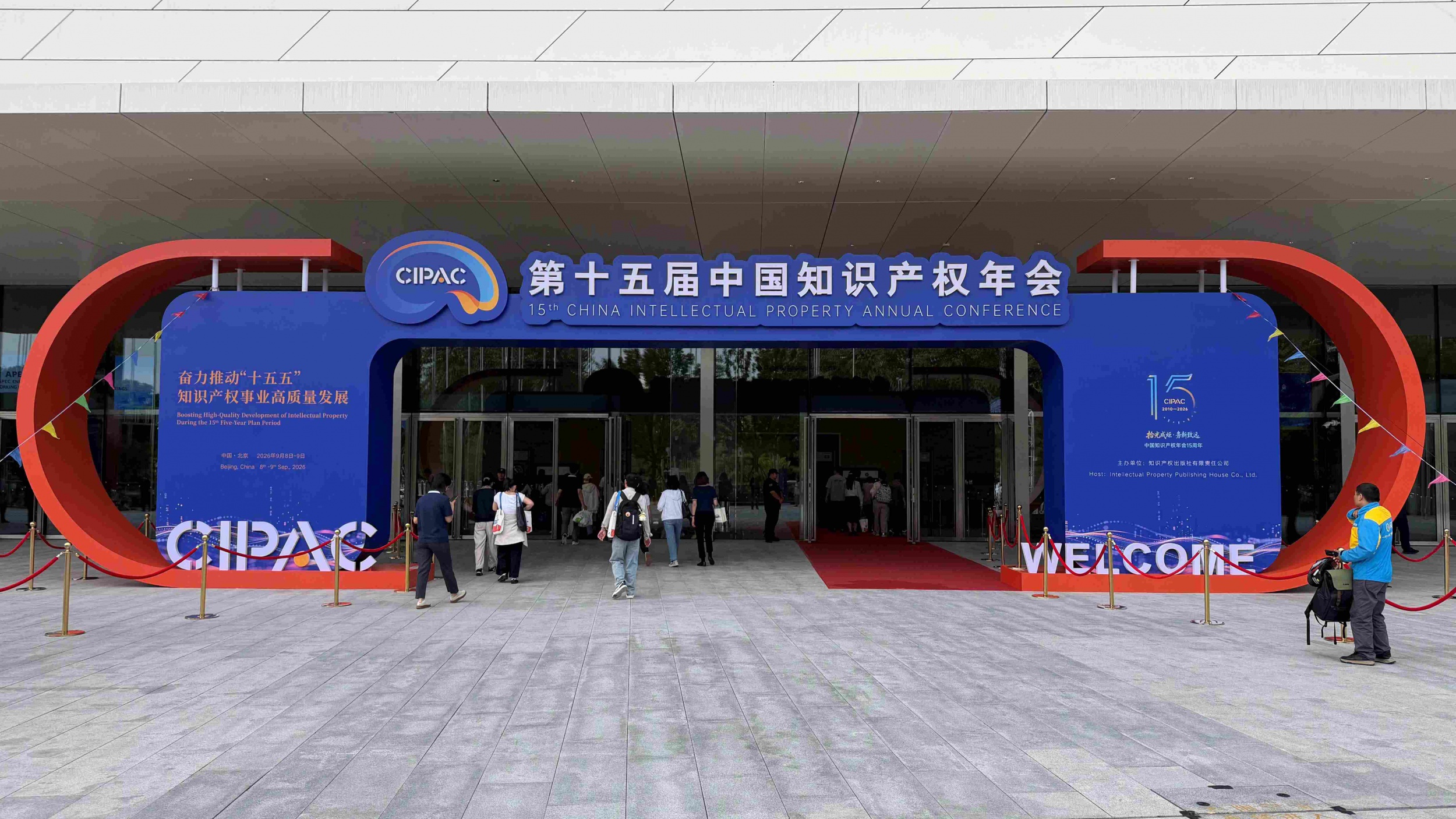
top Linking the Globe, Empowering Peers | IPspeedy Attends the 15th Intellectual Property Annual Conference
-
UPC Unfiltered, by Willem Hoyng - UPC Decisions Week 40, 2026
-
USPTO Waives the Petition Fee for the Streamlined Claim Set Pilot Program
-
Chinese Tech Firm Wins Complete Victory in US Patent Litigation

Top
Book Your Free Consultation


Phone / WhatsApp / WeChat

Room 220, 2nd Floor, Building E Bantian International Center
Huancheng South Road, Bantian Street Longgang District, Shenzhen, China
Talk to us
Clarify your questions or request a quote regarding our services. Please fill out the form, and you will be contacted soon.

IPS Global Solutions INC (DBA IPspeedy)
Your Trusted Worldwide IP Partner
Copyright © 2026 Pengzhiyun Intellectual Property
IPspeedy is the international operating name of Pengzhiyun Intellectual Property.
Pengzhiyun Intellectual Property
Action builds careers; sharing creates the future.


Follow Our TikTok
✅ Real case victories and success stories
✅ Latest IP market trends and analysis
✅ Practical knowledge and industry updates
Scan to stay informed and ahead of the curve.
Follow Our TikTok
✅ Real case victories and success stories
✅ Latest IP market trends and analysis
✅ Practical knowledge and industry updates
Scan to stay informed and ahead of the curve.
Copyright © 2026 Pengzhiyun Intellectual Property
IPspeedy is the international operating name of Pengzhiyun Intellectual Property.
