

IPS Global Solutions INC (DBA IPspeedy)
Your Trusted Worldwide IP Partner
 English
-
 中文
中文 -
English


Country/Region: Australia
Competent Authority: IP Australia
Official Website: https://www.ipaustralia.gov.au
Eligible Applicants: Australian enterprises; foreign enterprises; individual applicants;
*Foreign applicants are generally required to submit applications through a local agent.
Classification System: Australia uses the Nice Classification (45 classes in total); multi-class applications are permitted.
Required Application Materials:
Generally, the following information is required:
Trademark representation (image);
Applicant's name and address;
Classes of goods or services;
Registration Timeline: Approximately 7–9 months to complete registration.
Validity Period: 10 years (calculated from the date of registration); renewable every 10 years, with no limit on the number of renewals.
-
09/152026
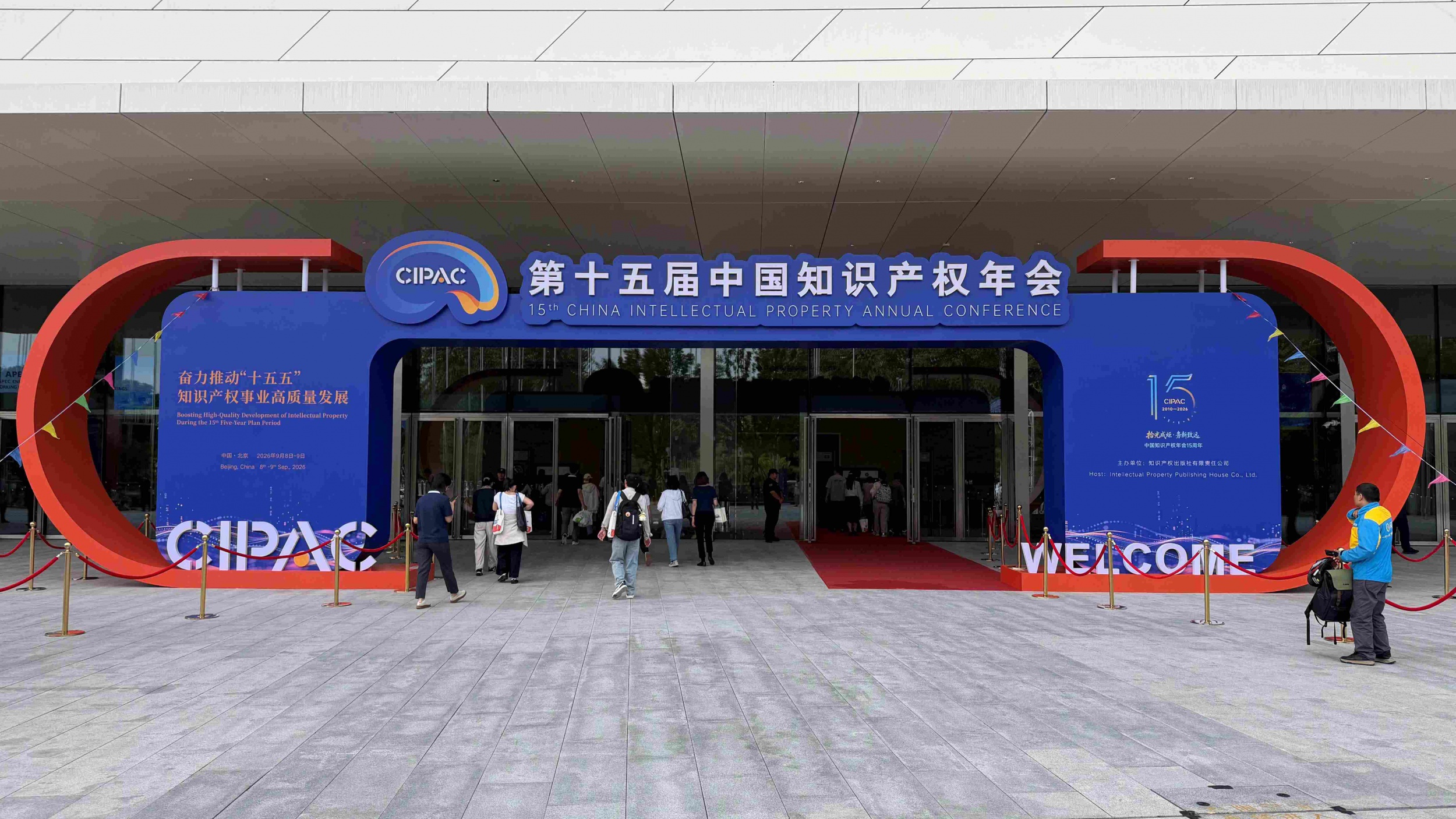
top Linking the Globe, Empowering Peers | IPspeedy Attends the 15th Intellectual Property Annual Conference
Recently, the 15th China Intellectual Property Annual Conference was successfully held in Beijing. As Asia's largest and most influential intellectual property industry event, this year's conference focused on the theme of vigorously promoting high-quality development of intellectual property under the 15th Five-Year Plan. It brought together representatives from domestic and foreign regulatory authorities, international organizations, overseas law firms, leading enterprises, and IP service inst
-
09/172026
UPC Unfiltered, by Willem Hoyng – UPC Decisions Week 37, 2026
In his week-37 roundup, Willem Hoyng covers the Milan Local Division's preliminary injunction for Abbott over Sibio's glucose monitoring device — including a detailed restatement of the UPC sufficiency-of-disclosure standard for functional claims — a Dusseldorf review upholding an ex parte evidentiary seizure against SwissBit, consolidated defence timing for Amazon group defendants, and a 50% court-fee refund on the Ericsson v Transsion settlement.
-
09/172026
USPTO Pivot on PTAB Oversight Raises Questions About PTAB Control
Sources tell IPWatchdog that USPTO Director John Squires has informed PTAB judges he will relinquish decision-making authority over which patent challenges to institute, returning it to the Board less than a year after centralizing it — an apparent repositioning ahead of a September 29 oversight hearing. Institution rates, which fell to 40% in FY 2026 from 68% in FY 2024, already ticked up to 54% in July and August.
-
09/172026
CIFTIS 2026 Observation: How Is the Intellectual Property Services Industry Moving to the Forefront of Industry?
At the 2026 CIFTIS international conference on IP services held September 10 in Beijing, the Beijing Intellectual Property Office released Implementation Measures for IP Financial Support Funds, building an integrated "pledge financing + insurance + securitization" support system. CNIPA pledged to push IP services toward higher specialization; Beijing now hosts over 10,000 IP service agencies and 14,000 practicing patent agents, whose 2025 filings accounted for over 40% of national invention gra
-
09/112026
UPC Unfiltered, by Willem Hoyng – UPC Decisions Week 36, 2026
In his week-36 roundup, Willem Hoyng covers the Dusseldorf Local Division's September 2 judgment for InterDigital against 11 Disney companies over a streaming patent — criticizing the 36 auxiliary requests that produced it — plus the Court of Appeal's refusal of suspensive effect for Fujifilm's rehearing request against Kodak, limits on employee questioning during the WEPA evidentiary seizure, and cost rulings on interpreters and security refunds.
-
09/112026
CAFC Affirms Fee Award Over Deficient Patent Pre-Suit Investigation
The Federal Circuit affirmed a Northern District of California ruling awarding attorney's fees to Platinum Optics Technology under 35 U.S.C. Section 285, finding Viavi Solutions litigated an "exceptional" case: it sued over optical filters without evidence any accused filter was sold in the United States, and kept relying on a license-released filter after a sworn declaration made its theory untenable. "There is no right to sue a party based on a nonmeritorious claim in hope of finding material
-
09/112026
What Typical IP Cases Does New Technology Bring? Policy and Law Must Keep Pace with the Times
At the China Intellectual Property Annual Conference on September 8, companies including Huawei described how 3D scanning and AI are reshaping infringement. CNIPA official Song Beibei said the revised Regulations on the Protection of Layout-Designs of Integrated Circuits — newly covering integrated photonics and quantum functions — will take effect October 15, and that China's 83 national IP protection centers have compressed invention patent grants via pre-examination to under three months.
-
09/042026
UPC Unfiltered, by Willem Hoyng – UPC Decisions Week 35, 2026
In his week-35 roundup, Willem Hoyng highlights the Hamburg Local Division's August 24 judgment in Fraunhofer v HMD, finding the AAC standard-essential patent EP 2 380 167 valid and infringed, rejecting the FRAND defense, and granting an injunction after eight years of unlicensed use. The week also brought notable court-fee rulings: Genevant v Moderna received only a 25% fee refund on settlement, while Malikie v Xiaomi received the standard 50%.
-
09/032026
Issa Hesitant to Renew USPTO Fee-Setting Authority Amid PTAB Changes
At a September 2 oversight hearing, House IP Subcommittee Chairman Darrell Issa questioned whether renewal of the USPTO's fee-setting authority under the America Invents Act should be conditioned on reforming Director John Squires' expanded discretionary denial practice at the PTAB. Congress approved a short-term extension through December 12. Four witnesses backed renewal but split on conditions, and all urged reconstituting the disbanded Patent Public Advisory Committee.
-
09/032026
New Rules Taking Effect in September: Amended Copyright Judicial Interpretation Ends Free Press Reposting Online
The Supreme People's Court's Decision amending the Interpretation on copyright civil disputes took effect September 1, 2026. It narrows the statutory license for press reposting to approved paper newspapers and periodicals and their identical digital versions, requires permission and remuneration for online reposting, clarifies that "making public" means disclosure to unspecified persons regardless of actual public awareness, and aligns the fair-use rule for artworks in public places with the 20
-
08/282026
UPC Unfiltered, by Willem Hoyng – UPC Decisions Week 34, 2026
In 'UPC Unfiltered' for week 34 of 2026, published August 24, Willem Hoyng of Ho
-
08/272026
Commenters Split on USPTO Proposal to Require RPI Disclosure for Reexams
Following the USPTO's July 2026 notice of proposed rulemaking requiring third-party requesters for ex parte reexamination (EPR) to identify all real parties in interest (RPIs), 26 comments filed before the August 21 deadline reveal a sharp divide. Eight of 17 organizations outright oppose the proposal, arguing Congress deliberately made reexam available to "any person" with anonymity protections, while supporters say the Office cannot police statutory estoppel without knowing RPI identities.
Blog

Top
Book Your Free Consultation


Phone / WhatsApp / WeChat

Room 220, 2nd Floor, Building E Bantian International Center
Huancheng South Road, Bantian Street Longgang District, Shenzhen, China
Talk to us
Clarify your questions or request a quote regarding our services. Please fill out the form, and you will be contacted soon.

IPS Global Solutions INC (DBA IPspeedy)
Your Trusted Worldwide IP Partner
Copyright © 2026 Pengzhiyun Intellectual Property
IPspeedy is the international operating name of Pengzhiyun Intellectual Property.
Pengzhiyun Intellectual Property
Action builds careers; sharing creates the future.


Follow Our TikTok
✅ Real case victories and success stories
✅ Latest IP market trends and analysis
✅ Practical knowledge and industry updates
Scan to stay informed and ahead of the curve.
Follow Our TikTok
✅ Real case victories and success stories
✅ Latest IP market trends and analysis
✅ Practical knowledge and industry updates
Scan to stay informed and ahead of the curve.
Copyright © 2026 Pengzhiyun Intellectual Property
IPspeedy is the international operating name of Pengzhiyun Intellectual Property.
