

IPS Global Solutions INC (DBA IPspeedy)
Your Trusted Worldwide IP Partner

Country/Region: Australia
Competent Authority: IP Australia
Official Website: https://www.ipaustralia.gov.au
Eligible Applicants: Australian enterprises; foreign enterprises; individual applicants;
*Foreign applicants are generally required to submit applications through a local agent.
Classification System: Australia uses the Nice Classification (45 classes in total); multi-class applications are permitted.
Required Application Materials:
Generally, the following information is required:
Trademark representation (image);
Applicant's name and address;
Classes of goods or services;
Registration Timeline: Approximately 7–9 months to complete registration.
Validity Period: 10 years (calculated from the date of registration); renewable every 10 years, with no limit on the number of renewals.
News

Federal Circuit Rejects PTAB's 'Ministerial' Requirement for Prior Art Priority
2026-10-14 13:38:47
Click:
The U.S. Court of Appeals for the Federal Circuit has rejected the Patent Trial and Appeal Board's reliance on a ministerial-requirements-only test for determining when a patent cited as prior art is entitled to the filing date of an earlier application in its priority chain, Reuters reported on October 13, 2026. The ruling addresses a recurring question in inter partes review and examination practice: how much proof is required before a reference patent can be backdated to an earlier U.S. filing for prior art purposes.
According to the report, the Board had applied a two-part approach under which a reference patent needed only to satisfy the ministerial requirements of AIA Sections 119 and 120 - principally a proper benefit claim, such as a specific reference to the earlier application filed in the required manner and time - in order to be treated as prior art as of the earlier filing date. The Federal Circuit held that satisfying those formal requirements alone does not establish the reference's entitlement to the earlier date.
The decision is consistent with the court's line of cases beginning with Dynamic Drinkware v. National Graphics (2015), which requires a showing that the earlier application provides Section 112 support for the relied-upon subject matter, and with the court's precedential August 2026 decision in Dental Monitoring SAS v. Align Technology (No. 25-1752), which held that the Dynamic Drinkware principle applies to AIA patents: a challenger should not be able to backdate prior art through an earlier application that would not have supported a patent on the claimed subject matter.
The practical consequences run in both directions. Petitioners and examiners relying on a reference's claimed priority date must be prepared to show adequate support in the earlier application, not merely a facially proper benefit claim; patent owners, in turn, retain a meaningful route to challenge the backdating of references that intervened only after the actual filing date of the reference. The ruling adds certainty to what counts as prior art in PTAB proceedings, where priority-chain attacks have become a standard feature of both petitions and patent owner responses.
Original Link: https://www.hoyngrokhmonegier.com/news-insights/detail/upc-unfiltered-by-willem-hoyng-upc-decisions-week-41-2026
新闻推荐
recommendation




Article recommendation
-

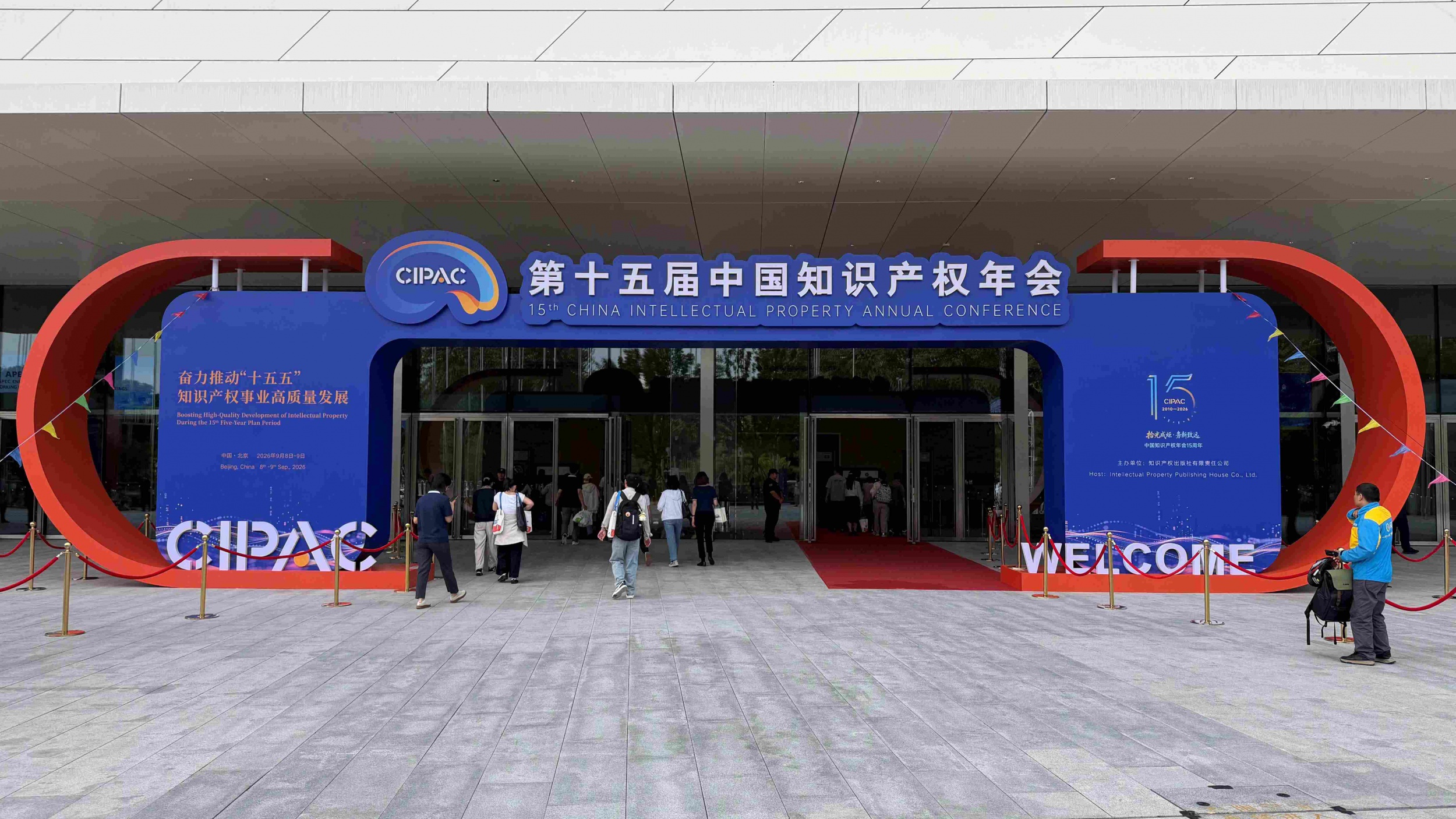
top Linking the Globe, Empowering Peers | IPspeedy Attends the 15th Intellectual Property Annual Conference
-
Government Sets Out Next Steps on Standard Essential Patents
-
Federal Circuit Rejects PTAB's 'Ministerial' Requirement for Prior Art Priority
-
Opinions of the China National Intellectual Property Administration on Strengthening the Construction of the Intellectual Property Public Service System

Top
Book Your Free Consultation


Phone / WhatsApp / WeChat

Room 220, 2nd Floor, Building E Bantian International Center
Huancheng South Road, Bantian Street Longgang District, Shenzhen, China
Talk to us
Clarify your questions or request a quote regarding our services. Please fill out the form, and you will be contacted soon.

IPS Global Solutions INC (DBA IPspeedy)
Your Trusted Worldwide IP Partner
Copyright © 2026 Pengzhiyun Intellectual Property
IPspeedy is the international operating name of Pengzhiyun Intellectual Property.
Pengzhiyun Intellectual Property
Action builds careers; sharing creates the future.


Follow Our TikTok
✅ Real case victories and success stories
✅ Latest IP market trends and analysis
✅ Practical knowledge and industry updates
Scan to stay informed and ahead of the curve.
Follow Our TikTok
✅ Real case victories and success stories
✅ Latest IP market trends and analysis
✅ Practical knowledge and industry updates
Scan to stay informed and ahead of the curve.
Copyright © 2026 Pengzhiyun Intellectual Property
IPspeedy is the international operating name of Pengzhiyun Intellectual Property.
