

IPS Global Solutions INC (DBA IPspeedy)
Your Trusted Worldwide IP Partner

Country/Region: Australia
Competent Authority: IP Australia
Official Website: https://www.ipaustralia.gov.au
Eligible Applicants: Australian enterprises; foreign enterprises; individual applicants;
*Foreign applicants are generally required to submit applications through a local agent.
Classification System: Australia uses the Nice Classification (45 classes in total); multi-class applications are permitted.
Required Application Materials:
Generally, the following information is required:
Trademark representation (image);
Applicant's name and address;
Classes of goods or services;
Registration Timeline: Approximately 7–9 months to complete registration.
Validity Period: 10 years (calculated from the date of registration); renewable every 10 years, with no limit on the number of renewals.
News

Shenzhen Intermediate Court Recognizes Unregistered Well-Known Trademark in Memory Chip Sector and Applies Punitive Damages in Typical Case
2026-08-27 16:56:40
Click:
The Shenzhen Intermediate People's Court has released a typical case on protecting well-known brands in the memory chip sector and applying punitive damages in accordance with the law, IP Economy reported on August 26, 2026. By recognizing an unregistered trademark used on memory chips as a well-known mark, piercing the veil of the defendants' 'shell companies,' and imposing punitive damages with joint and several liability on organized, family-run, large-scale infringement, the court sent a strong signal of strict judicial protection for 'chokepoint' technology products and built an IP protection barrier for nationally strategic science and technology industries.
The plaintiff, a leading Chinese storage semiconductor company whose self-developed technology broke international monopoly, holds a registered trademark on goods such as solid-state drives, while the same sign is also used as an unregistered trademark on its core memory chip products. Family members led by Wang acquired large numbers of shell companies, registered the mark at issue as their enterprise trade names, and sold infringing solid-state drives, memory cards and other products on a massive scale across major e-commerce platforms. The 29 stores involved recorded combined sales of more than RMB 22.5 million. The company sued Wang and 21 other parties, seeking cessation of trademark infringement and unfair competition, application of punitive damages, and compensation of RMB 15 million.
The court held that the unregistered trademark at issue had already achieved well-known status when the accused infringement took place. The defendants had acquired companies in concentrated batches and carried out organized, large-scale infringement on major e-commerce platforms, constituting infringement as a business and satisfying the requirements for punitive damages. For the trademark infringement portion, the court discretionarily determined illegal gains of RMB 3 million based on the defendants' sales of infringing products as the base amount and applied punitive damages; for the unfair competition portion, it awarded RMB 200,000 in economic losses. Total damages awarded amounted to RMB 12.2 million (first instance: Shenzhen Intermediate People's Court, (2024) Yue 03 Min Chu No. 3240).
According to the court, the case is a typical example of protecting well-known brands in the memory chip field and applying punitive damages in accordance with the law. By recognizing the unregistered well-known trademark, piercing the hidden cloak of the accused 'shell companies,' imposing punitive damages on family-run and large-scale serious infringement together with joint and several liability, and making malicious infringers pay a heavy price, the judgment conveys a strong signal that the judiciary strictly protects 'chokepoint' technology products, builds a solid IP protection barrier for nationally strategic science and innovation industries, and vigorously supports the high-quality development of new quality productive forces.
Original Link: https://www.ipeconomy.cn/dongtai/11224.html
Author:
IP Economy
From:
IP Economy (ipeconomy.cn)
新闻推荐
recommendation




Article recommendation
-

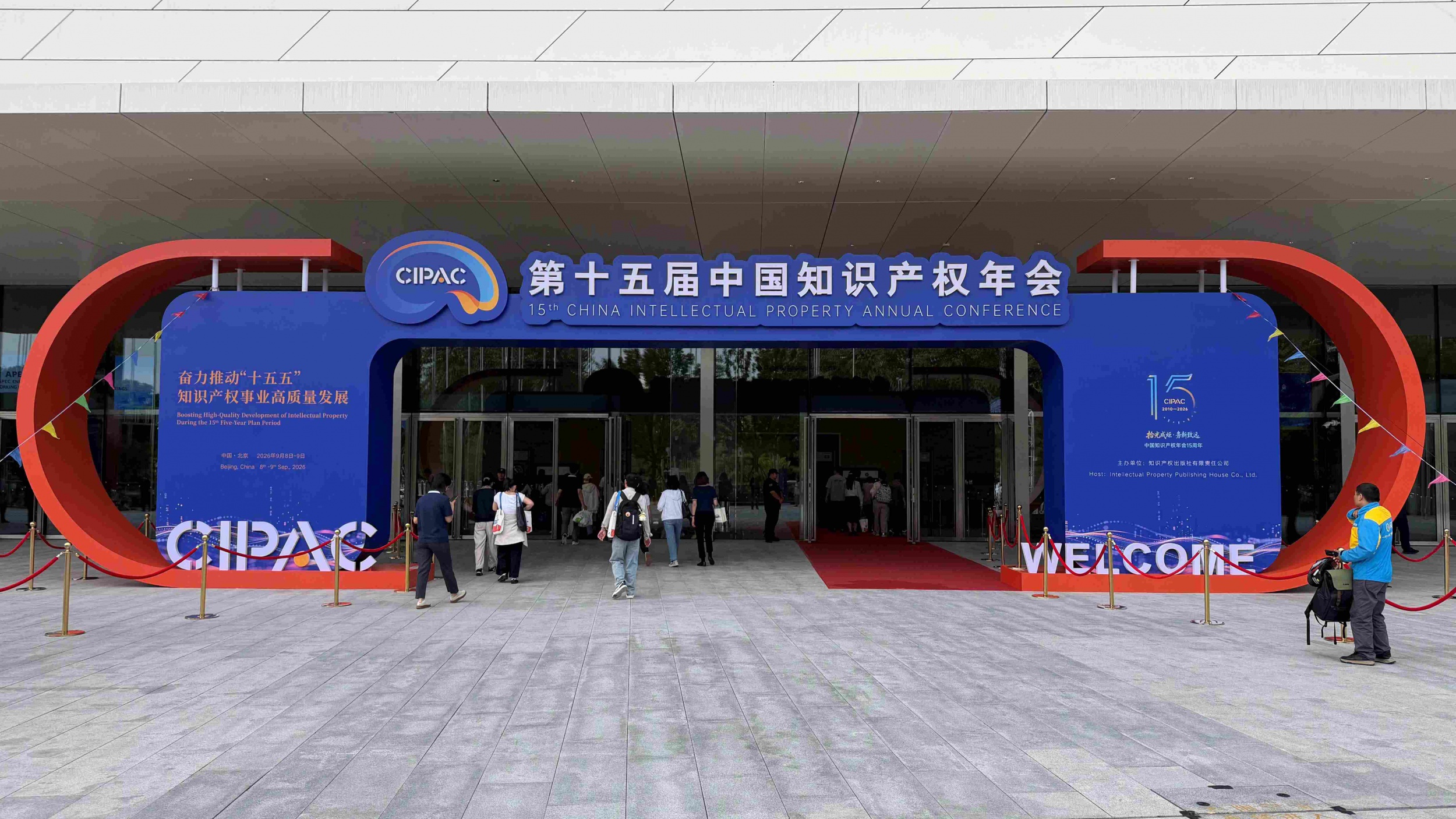
top Linking the Globe, Empowering Peers | IPspeedy Attends the 15th Intellectual Property Annual Conference
-
Planning to Protect Your Invention Abroad? Join WIPO's Free PCT Training for Innovators Across Tamil Nadu
-
Current Account Becomes WIPO Wallet
-
UPC Unfiltered, by Willem Hoyng - UPC Decisions Week 40, 2026

Top
Book Your Free Consultation


Phone / WhatsApp / WeChat

Room 220, 2nd Floor, Building E Bantian International Center
Huancheng South Road, Bantian Street Longgang District, Shenzhen, China
Talk to us
Clarify your questions or request a quote regarding our services. Please fill out the form, and you will be contacted soon.

IPS Global Solutions INC (DBA IPspeedy)
Your Trusted Worldwide IP Partner
Copyright © 2026 Pengzhiyun Intellectual Property
IPspeedy is the international operating name of Pengzhiyun Intellectual Property.
Pengzhiyun Intellectual Property
Action builds careers; sharing creates the future.


Follow Our TikTok
✅ Real case victories and success stories
✅ Latest IP market trends and analysis
✅ Practical knowledge and industry updates
Scan to stay informed and ahead of the curve.
Follow Our TikTok
✅ Real case victories and success stories
✅ Latest IP market trends and analysis
✅ Practical knowledge and industry updates
Scan to stay informed and ahead of the curve.
Copyright © 2026 Pengzhiyun Intellectual Property
IPspeedy is the international operating name of Pengzhiyun Intellectual Property.
