

Country/Region: Australia
Competent Authority: IP Australia
Official Website: https://www.ipaustralia.gov.au
Eligible Applicants: Australian enterprises; foreign enterprises; individual applicants;
*Foreign applicants are generally required to submit applications through a local agent.
Classification System: Australia uses the Nice Classification (45 classes in total); multi-class applications are permitted.
Required Application Materials:
Generally, the following information is required:
Trademark representation (image);
Applicant's name and address;
Classes of goods or services;
Registration Timeline: Approximately 7–9 months to complete registration.
Validity Period: 10 years (calculated from the date of registration); renewable every 10 years, with no limit on the number of renewals.


News

UPC Unfiltered, by Willem Hoyng - UPC Decisions Week 43, 2026
2026-10-29 13:58:58
Click:
Professor Willem Hoyng, chair of the UPC Advisory Board, published his weekly UPC Unfiltered commentary on October 26, 2026, covering decisions published by the Unified Patent Court in week 43. Court fees take center stage in AX Wireless v Xiaomi, where the infringement action was filed in 2025 but the defence and revocation counterclaim were filed after January 1, 2026, with the new higher fees. Xiaomi argued the old fees should apply because the case started in 2025 and asked for repayment of the EUR 4,900 difference. The Munich judge-rapporteur agreed, reasoning that under the Table of Fees the counterclaim fee mirrors the infringement fee, which was set under the old schedule - while expressly declining to follow the Court of Appeal's view that the new fees govern settlement refunds even for pre-2026 cases. Hoyng considers both decisions wrong and advises the Registry, ordered to return the amount, to appeal.
In the SEP case ZTE v Samsung, the Mannheim judge-rapporteur issued a case management order with a preliminary opinion ahead of hearings on November 18 (infringement and validity) and November 19 (FRAND defence). The JR construes ZTE's request for accounting information under Article 68 rather than Article 67 UPCA, reads the revocation counterclaim as limited to the countries where infringement is alleged, signals that certain prior-art combinations may not be allowable under Rule 263 RoP, and states he is inclined to conclude, based on Samsung's conduct, that it is not a willing licensee. In Philips v Quectel, The Hague held a second case management conference dealing with cost budgets and late-filed documents; the JR suggested mediation, which Quectel accepted, while keeping the oral hearing date. Hoyng comments that mediation in SEP disputes is useful only if binding and reasonably fast.
Procedural discipline runs through the rest of the week. In Dainese v Motocard, the Court of Appeal declared an application inadmissible because it was unsigned and refused a stay pending EPO opposition - prompting Hoyng to ask how a representative explains to a client that the case was lost for want of a signature. In Gucci v Agfa, the Court of Appeal admitted late-filed exhibits on appeal, with lessons Hoyng draws for both sides: keep invoking refused evidence, substantiate dependent-claim combinations, and prove every asserted claim feature. The Court of Appeal also denied Amazon's request for discretionary review of an order aligning defence deadlines (Amazon v Nixu), and Paris held in Valeo v SEG that a jurisdiction objection raised in the Statement of Defence is admissible under the Court of Appeal's NUC v Hurom case law.
On the merits, Mannheim's decision in SK v Volta confirms that the patent is its own lexicon and - to Hoyng's applause - refuses to award the patentee costs of a conditional revocation counterclaim whose condition was never fulfilled. In CUP&CINO v Alpina, Dusseldorf found no infringement, rejected a do-not-know defence while keeping the burden on the claimant, and applied The Hague's equivalence standard. Finally, the Milan Central Division in Sandoz v Novo Nordisk gave an extensive treatment of Arrow declarations sought against the semaglutide patent family: the court described the so-called divisional game as a potential abuse of rights that undermines legal certainty, but found insufficient evidence that Novo Nordisk intended to play it.
Original Link: https://www.hoyngrokhmonegier.com/news-insights/detail/upc-unfiltered-by-willem-hoyng-upc-decisions-week-43-2026
新闻推荐
recommendation




Article recommendation
-

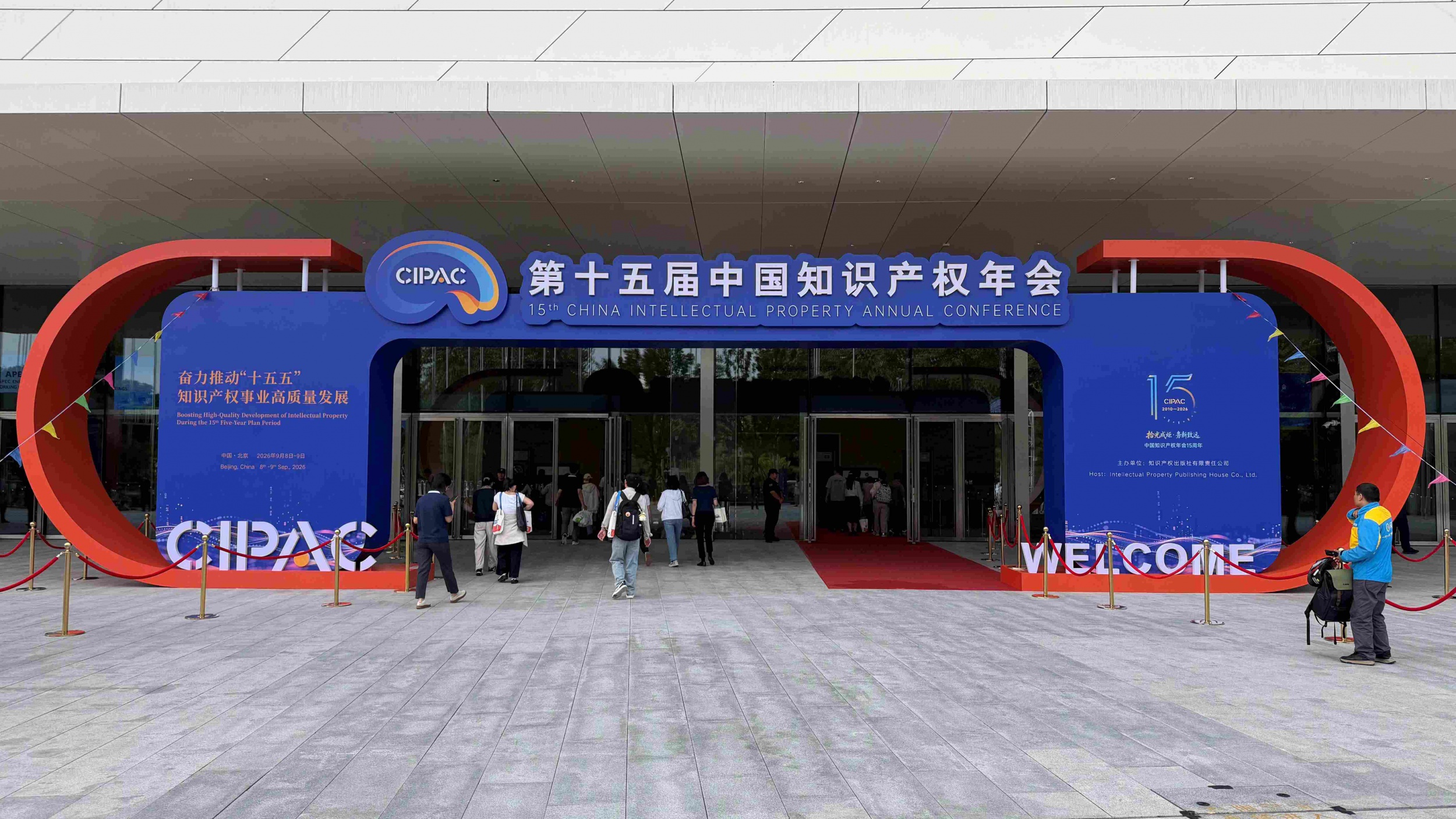
top Linking the Globe, Empowering Peers | IPspeedy Attends the 15th Intellectual Property Annual Conference
-
Jittima Announces 'DIP ONE' Policy to Upgrade Services, Strengthen Protection and Create IP Value
-
Methodology for Estimating the Scale and Cost of IP Infringement
-
UPC Unfiltered, by Willem Hoyng - UPC Decisions Week 43, 2026

Top

IPS Global Solutions INC (DBA IPspeedy)
Your Trusted Worldwide IP Partner
Copyright © 2026 Pengzhiyun Intellectual Property
IPspeedy is the international operating name of Pengzhiyun Intellectual Property.
Pengzhiyun Intellectual Property
Action builds careers; sharing creates the future.

Follow Our TikTok
✅ Real case victories and success stories
✅ Latest IP market trends and analysis
✅ Practical knowledge and industry updates
Scan to stay informed and ahead of the curve.
Follow Our TikTok
✅ Real case victories and success stories
✅ Latest IP market trends and analysis
✅ Practical knowledge and industry updates
Scan to stay informed and ahead of the curve.
Copyright © 2026 Pengzhiyun Intellectual Property
IPspeedy is the international operating name of Pengzhiyun Intellectual Property.
