

IPS Global Solutions INC (DBA IPspeedy)
Your Trusted Worldwide IP Partner
 English
-
 中文
中文 -
English


Country/Region: Australia
Competent Authority: IP Australia
Official Website: https://www.ipaustralia.gov.au
Eligible Applicants: Australian enterprises; foreign enterprises; individual applicants;
*Foreign applicants are generally required to submit applications through a local agent.
Classification System: Australia uses the Nice Classification (45 classes in total); multi-class applications are permitted.
Required Application Materials:
Generally, the following information is required:
Trademark representation (image);
Applicant's name and address;
Classes of goods or services;
Registration Timeline: Approximately 7–9 months to complete registration.
Validity Period: 10 years (calculated from the date of registration); renewable every 10 years, with no limit on the number of renewals.
News

In-Depth Look at U.S. Design Patent Extension Cases Part 1: Continuation and CIP - Unlocking Flexible Strategies for Scope of Protection
2025-11-26 10:30:45
Click:
U.S. Design Patent Extension Cases - Part 1
When building a U.S. design patent portfolio, many applicants face these questions:
l What if I want to adjust the scope of protection after filing the parent application?
l My product has minor improvements; how can I protect them without losing the priority date?
Fortunately, the U.S. patent system's 'extension case' framework provides solutions. Today, we break down the four main types of extension cases for U.S. designs! This part focuses on two frequently used scenarios: Continuation Applications and Continuation-in-Part Applications. Understanding their core logic and practical points leads to more flexible patent strategy!
I. Continuation Application
The 'Fine-Tuning Tool' for Scope of Protection – No New Matter
A Continuation application is an extension of the parent application. Its core principle is: do not change the disclosed content, only flexibly adjust the scope of protection.
1. Core Definition: Adjust Scope Only, No Content Changes
l Identical Content: The specification, drawings, etc., must be exactly the same as the parent application; no new design elements can be added.
l Adjustable Scope: Only the scope of protection can be adjusted, e.g., narrowing to the core design or regrouping design features.
l Rights Inheritance: Inherits the filing date and priority date of the parent application. The patent term and novelty assessment are based on the parent's date.
2. Practical Reminder: Timing and Key Advantage
l A Continuation application is a new application filed while the parent application is still pending.
l Often used to seek different claim scope for the same product, such as changing the interpretation of solid and broken lines in the drawings.
l Inherits the parent's filing date, avoiding the loss of priority that would occur if a new application were filed.

II. Continuation-in-Part Application (CIP)
Inherit the Parent AND Add New Design Matter
A Continuation-in-Part (CIP) application is a follow-up filing based on a submitted design patent application (the parent). It allows the applicant to add new, previously undisclosed design improvements while retaining the parent's content, enabling both continuation and expansion of patent protection.
1. Characteristics
l Retains Parent Content: Includes all content from the parent application.
l Adds New Matter: Can add new, related design improvements not disclosed in the parent (e.g., partial structural optimizations, color adjustments, appearance changes adapting to new functions).
l Requires Relation: The new design must be related to the core design of the parent application (it cannot be a completely independent new design).
2. Limitations on New Matter
The new matter must have 'support in the original disclosure' of the parent application, meaning design details that, while not explicitly shown, could be reasonably deduced. If this condition is not met, the new matter may be treated as an independent design, and the CIP application could be rejected.
3. Filing Date and Patent Term
l Matter from Parent: Enjoys the parent's filing date, avoiding prior art risks during the interim period.
l New Matter: Only enjoys the actual filing date of the CIP, resulting in a potentially shorter protection period.
Example:If the parent was filed in 2020 and the CIP in 2022, the overall term expires in 2035. The actual protection term for the new matter is only 13 years.
4. Filing Timing and Examination Risks (Common Issues)
l Filing Window: Must be filed while the parent application is pending (i.e., before a Notice of Allowance is issued, before abandonment, or before prosecution is terminated). It is advisable to file before the parent publishes to avoid the parent's publication becoming prior art against the new matter in the CIP.
Key Risk Warnings:
1. Insufficient Relation to Parent: The examiner may deem it an 'independent new design,' reject the CIP, and require a separate new application.
2. Misjudgment Risk: If the modifications are too extensive (e.g., changing core appearance features), the USPTO might misclassify it as a 'new application' rather than a CIP, causing loss of the parent's priority date.
3. Limited Protection Scope: The new design relies on the parent's disclosure and cannot claim rights separately from the parent's core design.

Continuation vs. CIP: A Clear Comparison to Avoid Misuse
Comparison Aspect | Continuation Application | Continuation-in-Part (CIP) Application |
Can add new design matter? | Absolutely not. Content must be identical. | Yes. Can add related improvement designs. |
Filing Date Inheritance | Fully inherits the parent's filing date for all content. | Old content inherits parent's date; new content uses CIP filing date. |
Core Purpose | Adjust the scope of protection for precise adaptation. | Supplement minor improvement designs, securing priority for them. |
Risk Level | Lower, as long as the content remains unchanged. | Higher, must meet relation and support in disclosure requirements. |
These are the core concepts of Continuation and CIP applications. In the next part, we will focus on the other two key extension types – the Continued Prosecution Application (CPA) and the Divisional Application – explaining how they address 'challenging rejections' and 'splitting multiple inventions.'
If you have specific cases for analysis or questions about today's content, feel free to leave a comment. Follow us for the next part
Author:
Shenzhen Pengzhiyun Intellectual Property Service
新闻推荐
recommendation




Article recommendation
-
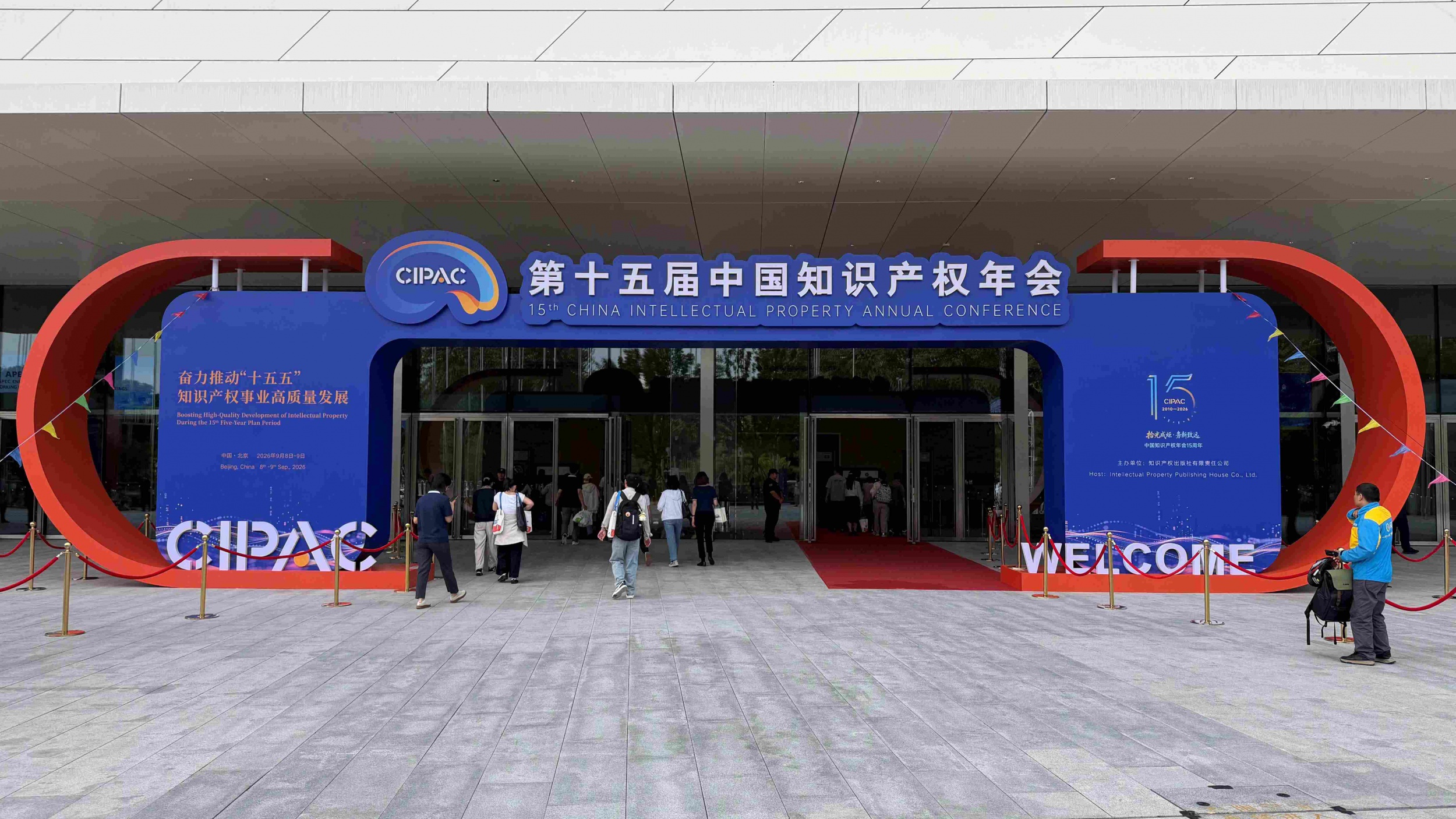
top Linking the Globe, Empowering Peers | IPspeedy Attends the 15th Intellectual Property Annual Conference
-
IPOS Update on IP/IT Dispute Resolution in Singapore: August-September 2026
-
Latest Trends in Australian Intellectual Property Applications
-
UPC Unfiltered, by Willem Hoyng – UPC Decisions Week 38, 2026

Top
Book Your Free Consultation


Phone / WhatsApp / WeChat

Room 220, 2nd Floor, Building E Bantian International Center
Huancheng South Road, Bantian Street Longgang District, Shenzhen, China
Talk to us
Clarify your questions or request a quote regarding our services. Please fill out the form, and you will be contacted soon.

IPS Global Solutions INC (DBA IPspeedy)
Your Trusted Worldwide IP Partner
Copyright © 2026 Pengzhiyun Intellectual Property
IPspeedy is the international operating name of Pengzhiyun Intellectual Property.
Pengzhiyun Intellectual Property
Action builds careers; sharing creates the future.


Follow Our TikTok
✅ Real case victories and success stories
✅ Latest IP market trends and analysis
✅ Practical knowledge and industry updates
Scan to stay informed and ahead of the curve.
Follow Our TikTok
✅ Real case victories and success stories
✅ Latest IP market trends and analysis
✅ Practical knowledge and industry updates
Scan to stay informed and ahead of the curve.
Copyright © 2026 Pengzhiyun Intellectual Property
IPspeedy is the international operating name of Pengzhiyun Intellectual Property.
