

IPS Global Solutions INC (DBA IPspeedy)
Your Trusted Worldwide IP Partner
 English
-
 中文
中文 -
English


Country/Region: Australia
Competent Authority: IP Australia
Official Website: https://www.ipaustralia.gov.au
Eligible Applicants: Australian enterprises; foreign enterprises; individual applicants;
*Foreign applicants are generally required to submit applications through a local agent.
Classification System: Australia uses the Nice Classification (45 classes in total); multi-class applications are permitted.
Required Application Materials:
Generally, the following information is required:
Trademark representation (image);
Applicant's name and address;
Classes of goods or services;
Registration Timeline: Approximately 7–9 months to complete registration.
Validity Period: 10 years (calculated from the date of registration); renewable every 10 years, with no limit on the number of renewals.
News

[U.S. Patent Major New Regulation] Non-U.S. Applicants Must Use a U.S. Representative! USPTO Issues New Rules — A U.S. Patent Shock? Crackdown on Irregular Practices!!!
2025-12-25 22:33:46
Click:
The United States Patent and Trademark Office (USPTO) issued a Notice of Proposed Rulemaking (NPRM) on December 23, proposing a clear requirement: all patent applicants and patent owners not domiciled in the United States or its territories must be represented by a registered U.S. patent agent or patent attorney when conducting patent matters before the USPTO.
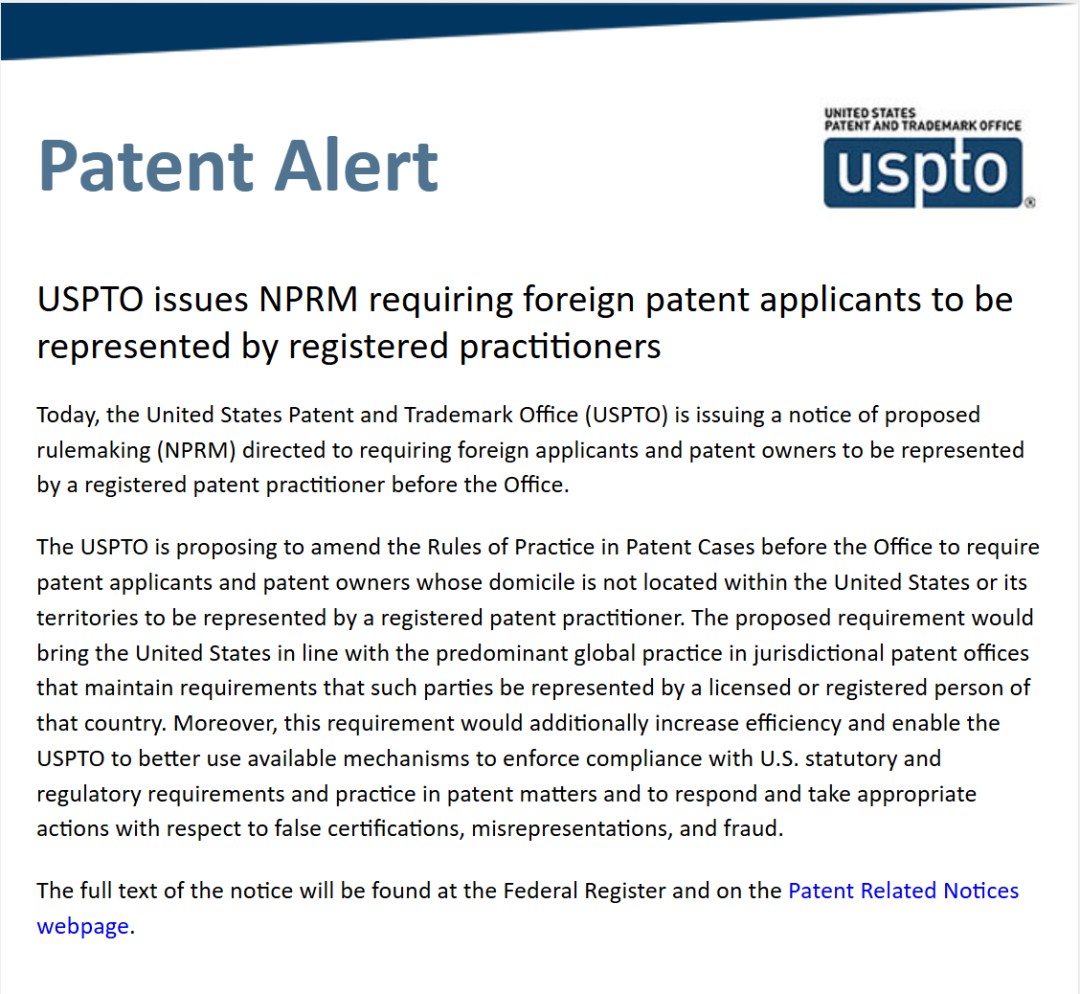
From 'DIY Possible' to 'Certification Required': Core Drastic Change in Rules
According to the draft revisions to 37 CFR Part 1, the USPTO will make the following key adjustments:
Complete Prohibition on Self-Representation for Non-U.S. Applicants
Whether it's an initial filing, responding to office actions, or handling patent ownership changes, as long as the applicant or patent owner's domicile is not within the U.S., all documents must be signed by a registered patent practitioner. Even forms for paying issue fees (like PTOL-85B) are no exception.
Combating Fraud as a Primary Motive
The USPTO explicitly stated that there has been a surge in fraudulent micro entity certifications (to obtain fee reductions) and document forgery issues in recent years. When pro se applicants abandon applications, the USPTO cannot track or investigate. Registered practitioners, bound by the USPTO Rules of Professional Conduct, have an obligation to cooperate with investigations, and violations could lead to disciplinary action—this essentially installs a 'regulatory tracker' on every application.
Aligning Globally, Improving Efficiency
Currently, major patent offices worldwide (such as the EPO and the CNIPA in China) require foreign applicants to proceed through local representatives. This move by the USPTO aims to 'align with international practices' while reducing examination delays caused by non-standard documents.
Who is Affected?
This rule has far-reaching implications, primarily targeting the following groups:
All individual inventors who are not U.S. residents
They will no longer be able to directly file patent applications with the USPTO.
Companies and enterprises headquartered outside the United States
This includes all Chinese companies planning to enter or already engaged in U.S. patent portfolio activities.
Entities filing applications through informal channels
The new rule aims to eliminate low-quality or fraudulent applications submitted via non-professional agencies.
Compliance Countdown: Applicants Must Act
Although the new rule is still in a 30-day public comment period, the USPTO has clearly indicated it is 'determined to proceed.' It is recommended that all companies planning to enter the U.S. market:
Immediately Assess
Check existing applications for any instances of self-filing or partial representation.
Select a Representative
Be sure to choose and appoint a reliable U.S. patent attorney or agency to avoid significant losses due to minor savings.
Author:
Shenzhen Pengzhiyun Intellectual Property Service
新闻推荐
recommendation




Article recommendation
-
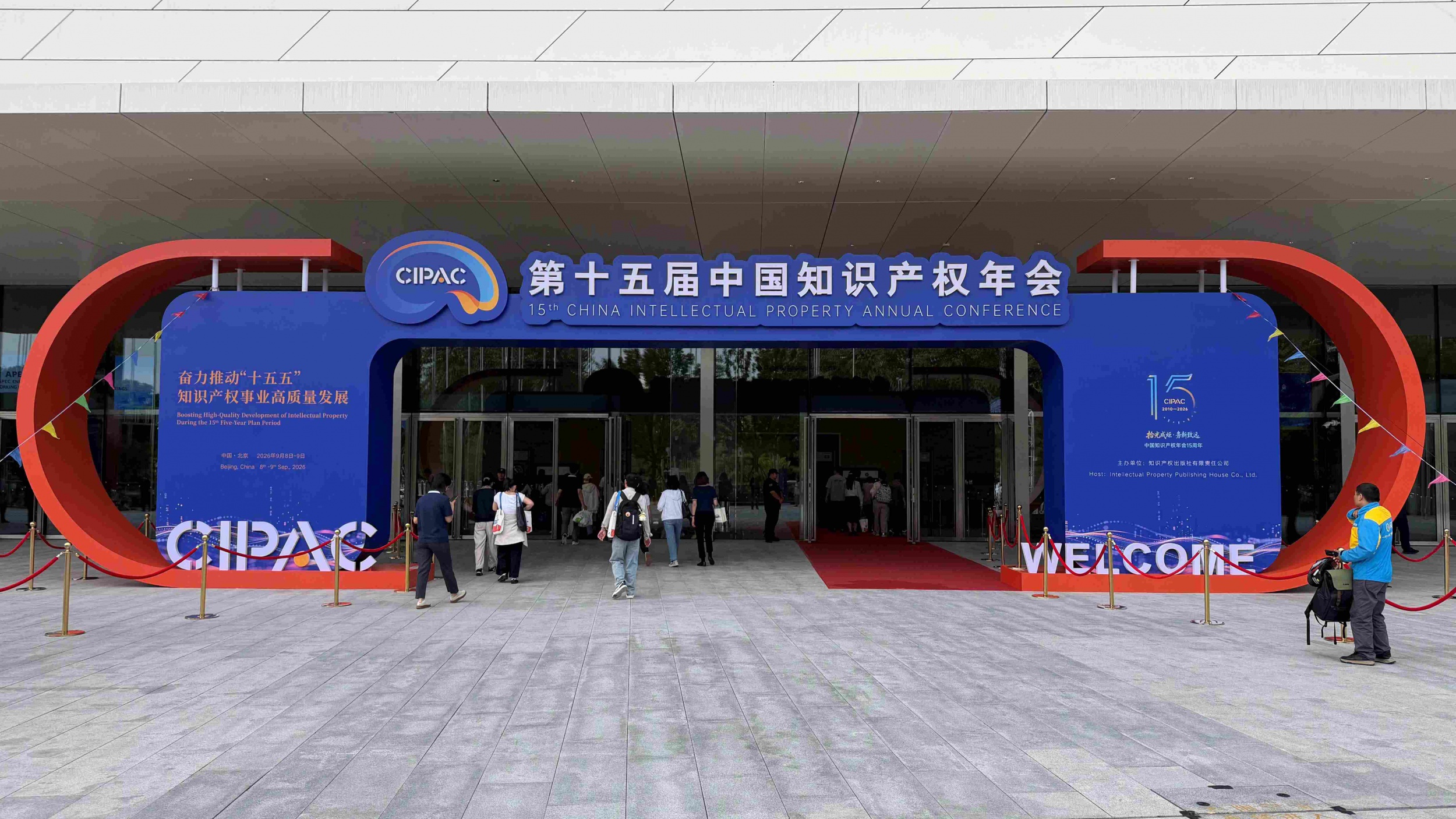
top Linking the Globe, Empowering Peers | IPspeedy Attends the 15th Intellectual Property Annual Conference
-
IPOS Update on IP/IT Dispute Resolution in Singapore: August-September 2026
-
Latest Trends in Australian Intellectual Property Applications
-
UPC Unfiltered, by Willem Hoyng – UPC Decisions Week 38, 2026

Top
Book Your Free Consultation


Phone / WhatsApp / WeChat

Room 220, 2nd Floor, Building E Bantian International Center
Huancheng South Road, Bantian Street Longgang District, Shenzhen, China
Talk to us
Clarify your questions or request a quote regarding our services. Please fill out the form, and you will be contacted soon.

IPS Global Solutions INC (DBA IPspeedy)
Your Trusted Worldwide IP Partner
Copyright © 2026 Pengzhiyun Intellectual Property
IPspeedy is the international operating name of Pengzhiyun Intellectual Property.
Pengzhiyun Intellectual Property
Action builds careers; sharing creates the future.


Follow Our TikTok
✅ Real case victories and success stories
✅ Latest IP market trends and analysis
✅ Practical knowledge and industry updates
Scan to stay informed and ahead of the curve.
Follow Our TikTok
✅ Real case victories and success stories
✅ Latest IP market trends and analysis
✅ Practical knowledge and industry updates
Scan to stay informed and ahead of the curve.
Copyright © 2026 Pengzhiyun Intellectual Property
IPspeedy is the international operating name of Pengzhiyun Intellectual Property.
