

IPS Global Solutions INC (DBA IPspeedy)
Your Trusted Worldwide IP Partner
 English
-
 中文
中文 -
English


Country/Region: Australia
Competent Authority: IP Australia
Official Website: https://www.ipaustralia.gov.au
Eligible Applicants: Australian enterprises; foreign enterprises; individual applicants;
*Foreign applicants are generally required to submit applications through a local agent.
Classification System: Australia uses the Nice Classification (45 classes in total); multi-class applications are permitted.
Required Application Materials:
Generally, the following information is required:
Trademark representation (image);
Applicant's name and address;
Classes of goods or services;
Registration Timeline: Approximately 7–9 months to complete registration.
Validity Period: 10 years (calculated from the date of registration); renewable every 10 years, with no limit on the number of renewals.
News

Patent Enforcement: Platform Listing Complained Against? Don't Just Take It! File a Patent Invalidation Declaration to Seize the Initiative in Protecting Your Rights
2025-10-16 11:07:17
Click:
File a Patent Invalidation Declaration! Seize the Initiative in Protecting Your Rights! Platform Enforcement!
Introduction: The Unexpected Notification
'Ding—Your platform product listing has been taken down due to a complaint alleging infringement of design patent rights.'
When this notification pops up, many sellers' first reaction is panic: quickly delist the product, fearing impacts on store ratings and traffic. But have you considered that this might not be actual 'infringement,' but rather a 'bad-faith complaint' initiated by the other party leveraging their patent? Faced with this situation, must you simply swallow your pride and remain passive?
Absolutely not! Today, we'll break down a 'countermeasure'—finding vulnerabilities in the opponent's patent and proactively filing a patent invalidation declaration. This can not only help restore your listing and recoup losses but also shift you from 'passive reaction' to 'active rights enforcement,' fundamentally breaking the cycle of complaints.
Part 1: Why the Complaint Arrived? Don't Assume Fault Immediately! The Problem Might Lie with the Opponent's Patent Itself
Many sellers, upon receiving a patent complaint, instinctively suspect their product 'actually infringed.' However, in reality, behind many complaints lies the fact that the opponent's patent itself has 'vulnerabilities'—such as the patented design being highly similar to prior art, lacking novelty, or even being an invalid 'junk patent' filed just to fill quotas.
Holders of these 'problematic patents' often exploit sellers' unfamiliarity with patent law, using complaints to delist listings and squeeze market space, aiming to monopolize sales. This type of 'patent trolling' complaint is particularly common in industries like 3C electronics, home goods, and apparel accessories.
This means the opponent's patent itself might lack 'novelty' and be susceptible to invalidation.
Part 2: How to Find Vulnerabilities in the Opponent's Patent? 4 Core Search Directions
The prerequisite for filing a patent invalidation declaration is finding grounds for invalidating the opponent's patent.
1. Search for Patents Published Before the Filing Date:
Use relevant patent databases to search for design patents that were already granted and published beforethe filing date of the opponent's patent, which are 'identical or substantially similar.'
Example:If the opponent's patent filing date is January 2025, but a highly similar design patent was published in December 2024, the opponent's patent might be invalidated due to 'lack of novelty.'
2. Search for Non-Patent Public Disclosures Before the Filing Date:
Beyond patents, 'non-patent public disclosures' before the filing date can also serve as grounds for invalidation, such as:
l Historical sales records on e-commerce platforms (e.g., early product listings/images on Amazon, Temu).
l Public information from trade shows (e.g., product images on exhibition websites, news reports).
l Media coverage, magazines, journals (e.g., product images published in design magazines).
l Public content on social media, short video platforms (e.g., a 'DIY similar product' video posted by a blogger in 2025).
3. Analyze 'Substantial Differences in Design Distinctive Features':
The core of design patent protection is the 'distinctive features' of the design. If the distinctive features of the opponent's patent lack substantial difference from a 'combination' of existing prior designs, it might also be invalidated.
4. Check for 'Defects in the Patent Application Documents'
Beyond the design itself, the opponent's 'application documents' might contain vulnerabilities, such as:
l Patent drawings being unclear, lacking sufficient views, failing to fully represent the design characteristics.
l The design description being vague, not clearly stating the 'distinctive features,' leading to an unclear scope of protection.
l Contradictions in the materials submitted during application (e.g., inconsistency between the design description and the drawings).
l These defects might mean the patent 'does not meet the grant conditions,' providing an opening for invalidation.
Part 3: The Power of Invalidation: From Passive to Active
The examination period for an invalidation declaration is typically 6-12 months. Once successfully invalidated, the opponent's patent is deemed invalid ab initio(from the beginning). Not only does the current complaint become groundless, but they also cannot use this patent to threaten you in the future. Many people think the success rate of invalidation is low, but in fact, especially where prior public technology exists, the success rate is far higher than you might imagine


Author:
Shenzhen Pengzhiyun Intellectual Property Service
新闻推荐
recommendation
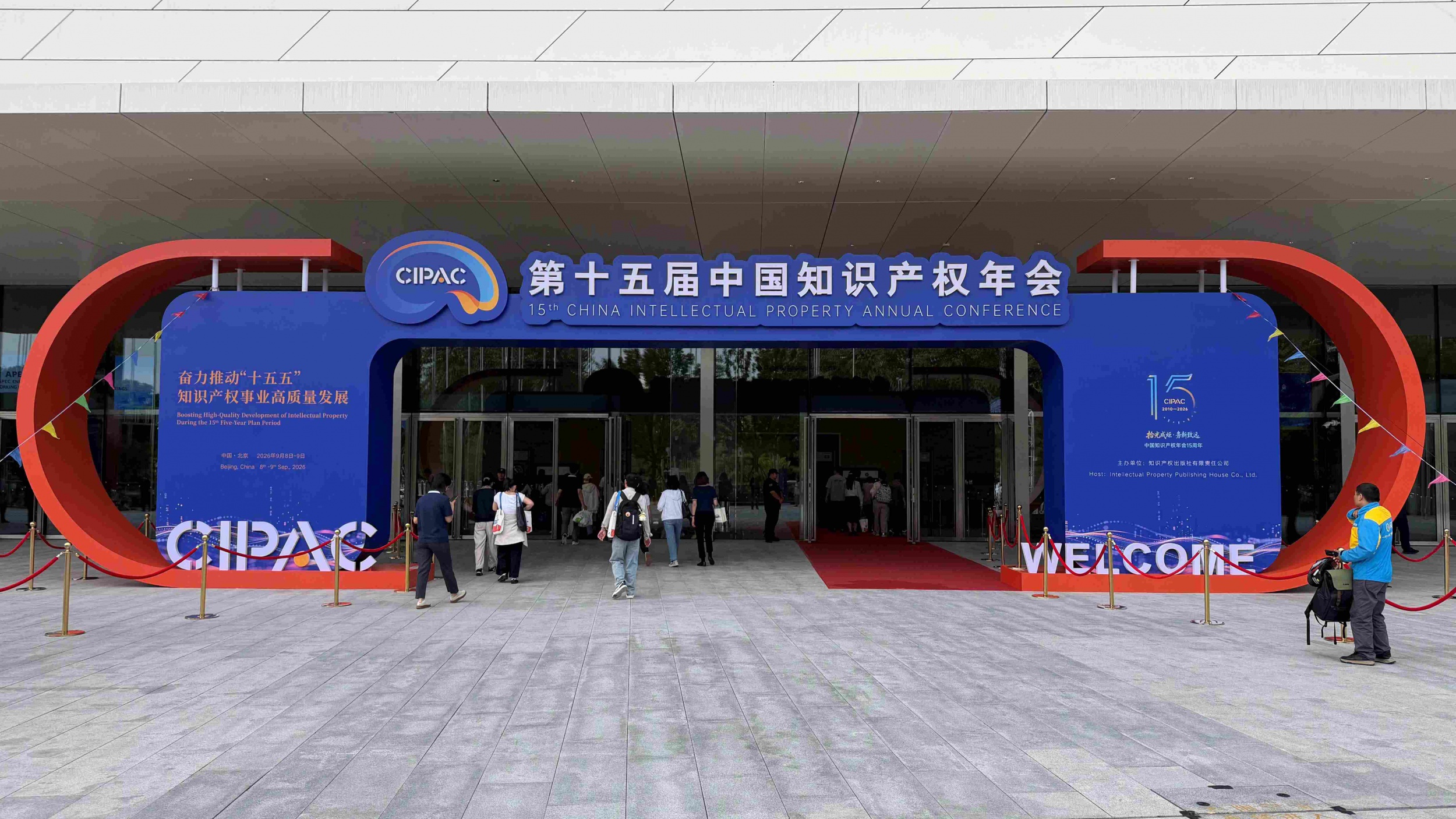




Article recommendation
-
top Linking the Globe, Empowering Peers | IPspeedy Attends the 15th Intellectual Property Annual Conference
-
IPOS Update on IP/IT Dispute Resolution in Singapore: August-September 2026
-
Latest Trends in Australian Intellectual Property Applications
-
UPC Unfiltered, by Willem Hoyng – UPC Decisions Week 38, 2026

Top
Book Your Free Consultation


Phone / WhatsApp / WeChat

Room 220, 2nd Floor, Building E Bantian International Center
Huancheng South Road, Bantian Street Longgang District, Shenzhen, China
Talk to us
Clarify your questions or request a quote regarding our services. Please fill out the form, and you will be contacted soon.

IPS Global Solutions INC (DBA IPspeedy)
Your Trusted Worldwide IP Partner
Copyright © 2026 Pengzhiyun Intellectual Property
IPspeedy is the international operating name of Pengzhiyun Intellectual Property.
Pengzhiyun Intellectual Property
Action builds careers; sharing creates the future.

Follow Our TikTok
✅ Real case victories and success stories
✅ Latest IP market trends and analysis
✅ Practical knowledge and industry updates
Scan to stay informed and ahead of the curve.
Follow Our TikTok
✅ Real case victories and success stories
✅ Latest IP market trends and analysis
✅ Practical knowledge and industry updates
Scan to stay informed and ahead of the curve.
Copyright © 2026 Pengzhiyun Intellectual Property
IPspeedy is the international operating name of Pengzhiyun Intellectual Property.
