

IPS Global Solutions INC (DBA IPspeedy)
Your Trusted Worldwide IP Partner
 English
-
 中文
中文 -
English


Country/Region: Australia
Competent Authority: IP Australia
Official Website: https://www.ipaustralia.gov.au
Eligible Applicants: Australian enterprises; foreign enterprises; individual applicants;
*Foreign applicants are generally required to submit applications through a local agent.
Classification System: Australia uses the Nice Classification (45 classes in total); multi-class applications are permitted.
Required Application Materials:
Generally, the following information is required:
Trademark representation (image);
Applicant's name and address;
Classes of goods or services;
Registration Timeline: Approximately 7–9 months to complete registration.
Validity Period: 10 years (calculated from the date of registration); renewable every 10 years, with no limit on the number of renewals.
News

Revised Measures for the Administration of Priority Examination of Patents to Take Effect on September 1
2026-08-21 11:46:51
Click:
The revised Measures for the Administration of Priority Examination of Patents, recently published by the China National Intellectual Property Administration (CNIPA), will take effect on September 1, 2026, China Intellectual Property News reported in an analysis published this week. The Outline for Building a Powerful Intellectual Property Nation (2021-2035) calls for improving patent and trademark examination policy oriented toward strengthened protection, and experts describe this revision as a further optimization of the priority examination system in response to innovation development needs, intended to help cultivate new quality productive forces.
'Intellectual property is a foundational system supporting comprehensive innovation, and patent examination is the source link of IP protection,' said Ma Yide, dean of the School of Intellectual Property at the University of Chinese Academy of Sciences. Whether examination is timely affects a company's ability to seize windows of technological iteration and market competition, and whether examination quality is sound affects the stability of patent rights and the security of technology transactions. The priority examination system, he said, now achieves a higher-level balance among quality, efficiency and fairness, providing timely, stable and predictable protection for genuine innovation.
Jiang Qimeng, a specially-appointed associate research fellow at the Intellectual Property School of East China University of Political Science and Law, noted that the priority examination system established in 2012 created fast-track channels for certain important invention patent applications, accelerating examination of qualifying cases without lowering grant standards. The revision, she said, marks a further shift of China's patent examination system from traditional procedural management toward a more precise, efficient and innovation-serving governance model. A key change is the sharper focus on high-quality applications in emerging and future industries: because such sectors iterate quickly and have short competitive windows, a patent grant that arrives out of sync with product launch, financing, licensing or standard-setting can lose much of its commercial and strategic value.
Ma Yide emphasized that priority examination resources are scarce — granting priority to one application effectively reallocates public examination resources — so efficiency, fairness and credibility must be managed together. The revised Measures establish a mechanism under which provincial IP offices recommend, CNIPA conducts unified review, and relevant State Council departments participate in coordination, combining local knowledge of industries and innovators with unified national examination standards. Published recommendation rules, dynamically allocated priority quotas, staff supervision and dishonesty penalties together form a closed loop of 'recommendation, review, examination, supervision and accountability,' moving IP public governance from case-by-case approval to whole-process governance and helping prevent resource abuse and rent-seeking.
According to CNIPA's website, the revision also improves the whole-process management system, standardizing the acceptance, review and examination stages of priority examination. Jiang Qimeng said this is intended to improve the precision of resource allocation and prevent cases inconsistent with the system's purpose from occupying limited examination resources. The revision follows CNIPA's release of the updated Measures (Order No. 85) on July 30, 2026, replacing the 2017 version.
Original Link: https://credit.zhangye.gov.cn/wcm/content/detail/20260817163034_100810.html
Author:
China Intellectual P
From:
China Intellectual Property News (via Zhangye Municipal Government portal)
新闻推荐
recommendation




Article recommendation
-
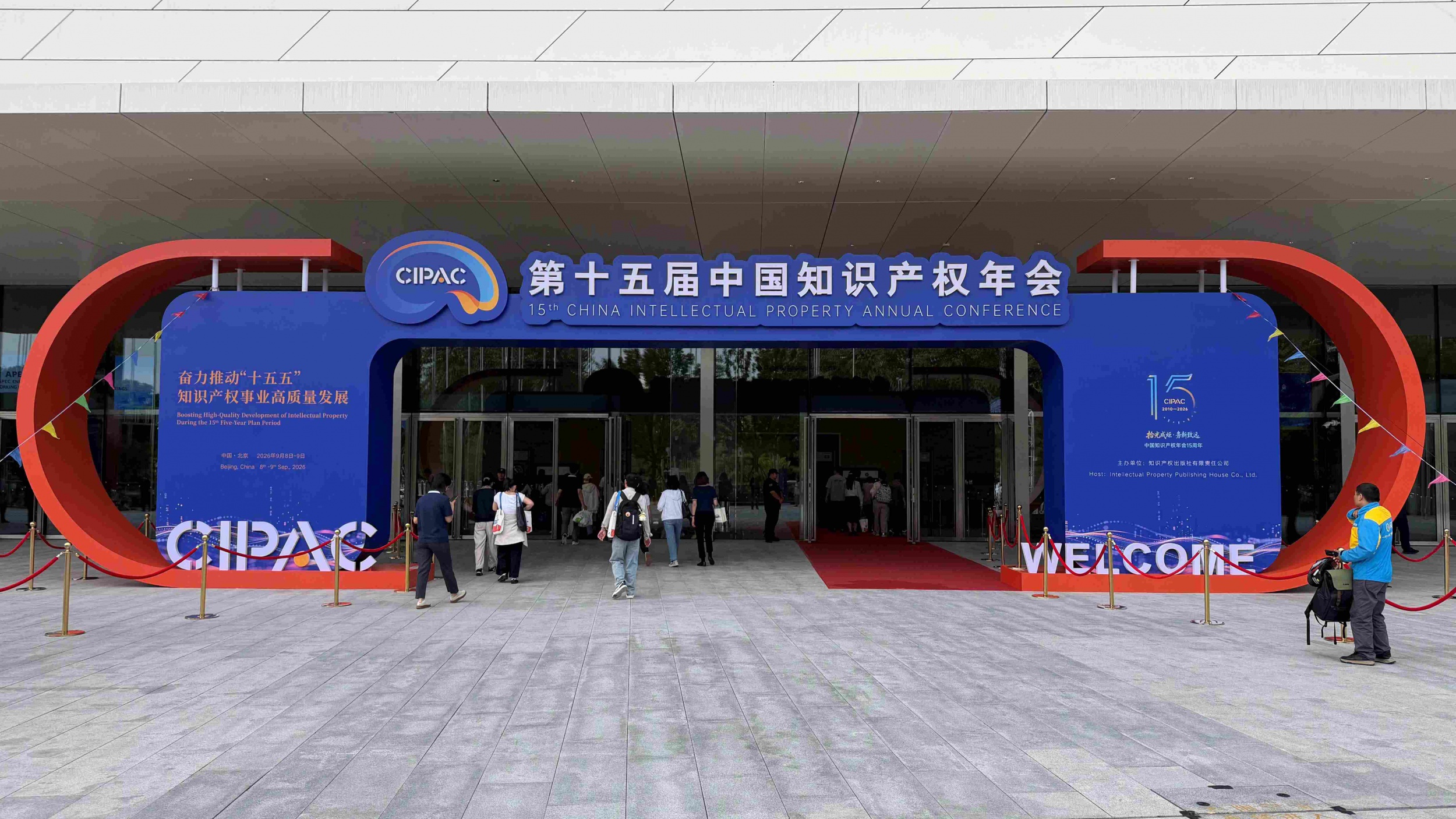
top Linking the Globe, Empowering Peers | IPspeedy Attends the 15th Intellectual Property Annual Conference
-
UPC Unfiltered, by Willem Hoyng – UPC Decisions Week 39, 2026
-
Senate IP Subcommittee Focuses on Fee-Setting, PTAB Rule in USPTO Oversight Hearing
-
Fuzhou Releases 15th Five-Year Plan for IP Protection and Utilization, Targeting an IP-Strong City by 2030

Top
Book Your Free Consultation


Phone / WhatsApp / WeChat

Room 220, 2nd Floor, Building E Bantian International Center
Huancheng South Road, Bantian Street Longgang District, Shenzhen, China
Talk to us
Clarify your questions or request a quote regarding our services. Please fill out the form, and you will be contacted soon.

IPS Global Solutions INC (DBA IPspeedy)
Your Trusted Worldwide IP Partner
Copyright © 2026 Pengzhiyun Intellectual Property
IPspeedy is the international operating name of Pengzhiyun Intellectual Property.
Pengzhiyun Intellectual Property
Action builds careers; sharing creates the future.


Follow Our TikTok
✅ Real case victories and success stories
✅ Latest IP market trends and analysis
✅ Practical knowledge and industry updates
Scan to stay informed and ahead of the curve.
Follow Our TikTok
✅ Real case victories and success stories
✅ Latest IP market trends and analysis
✅ Practical knowledge and industry updates
Scan to stay informed and ahead of the curve.
Copyright © 2026 Pengzhiyun Intellectual Property
IPspeedy is the international operating name of Pengzhiyun Intellectual Property.
